“Well, who are you? (who are you? who, who, who, who?).”

– Pete Townshend, Who Are You?

The Long Story Short . . .

I came to Garmisch-Partenkirchen as a lapsed lawyer and, a few years with no legal work and a global pandemic later, I left a local folk art historian.

My wife and I moved to the market town of Garmisch-Partenkirchen in March of 2019.  

Both of us came from the United States, and we knew very little about Germany — let alone how to speak German.

Before sojourning to this small Alpine paradise, I’d had a very square job in one of those square states out West: I was a lawyer in Colorado.

So, like every tourist to Southern Germany for the first time, I couldn’t help but notice how very Bavarian it all seemed . . .

. . . When an American thinks of Germany, this place is what they imagine.

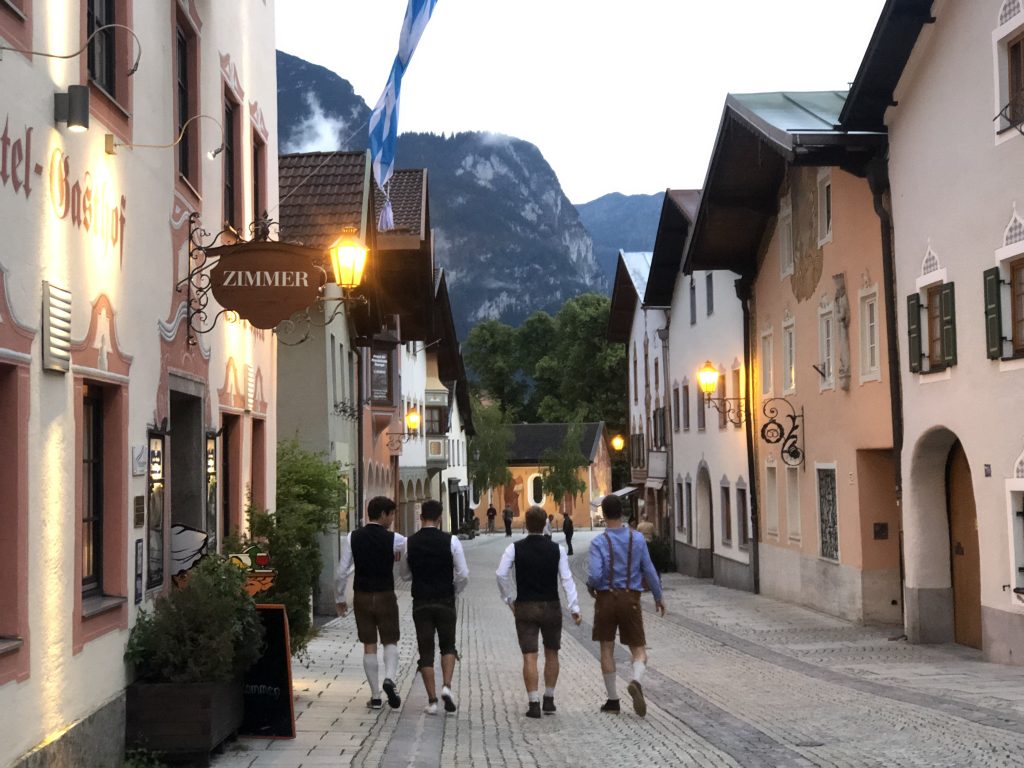
Like something out of a fairytale, the old streets are narrow and cobbled, and on a nearby hill overlooking the town, there are the ruins of an ancient castle.

The men really do walk around in lederhosen and the women really do wear dirndl dresses.  

And there really is a fest of some kind every week which gives everyone the opportunity to dress up and dance and prost each other with huge mugs of beer.

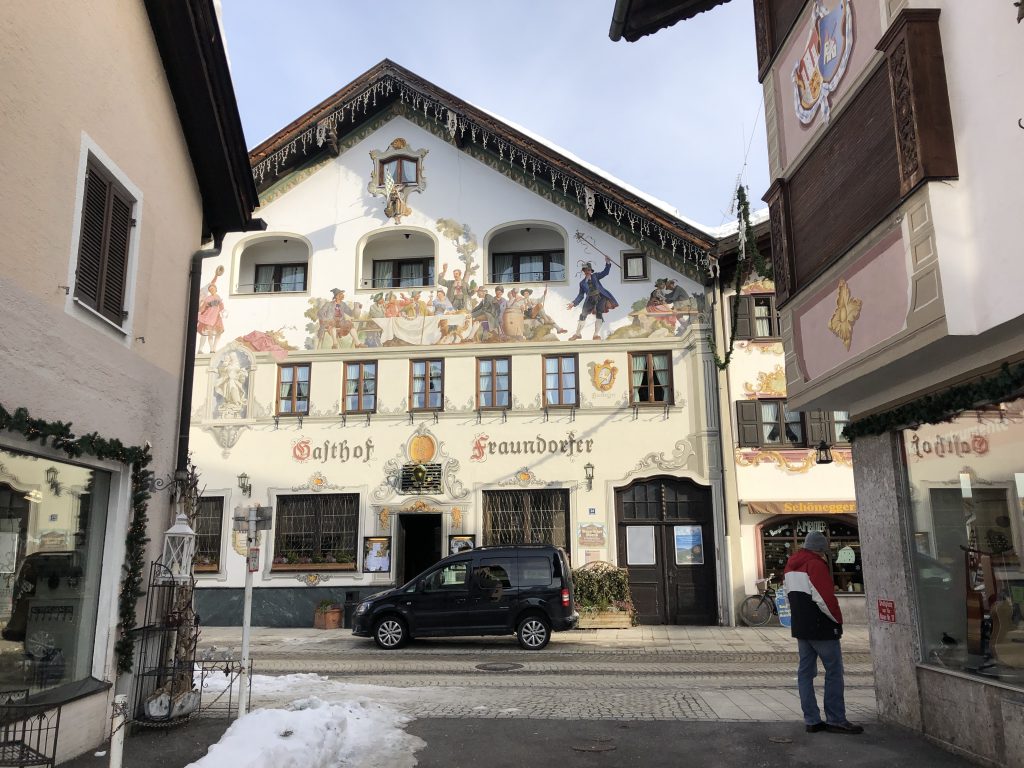
And, like every tourist, I found myself quite literally stopping when walking just to take pictures of the buildings.

Because all the buildings here seem to be covered in paintings. 

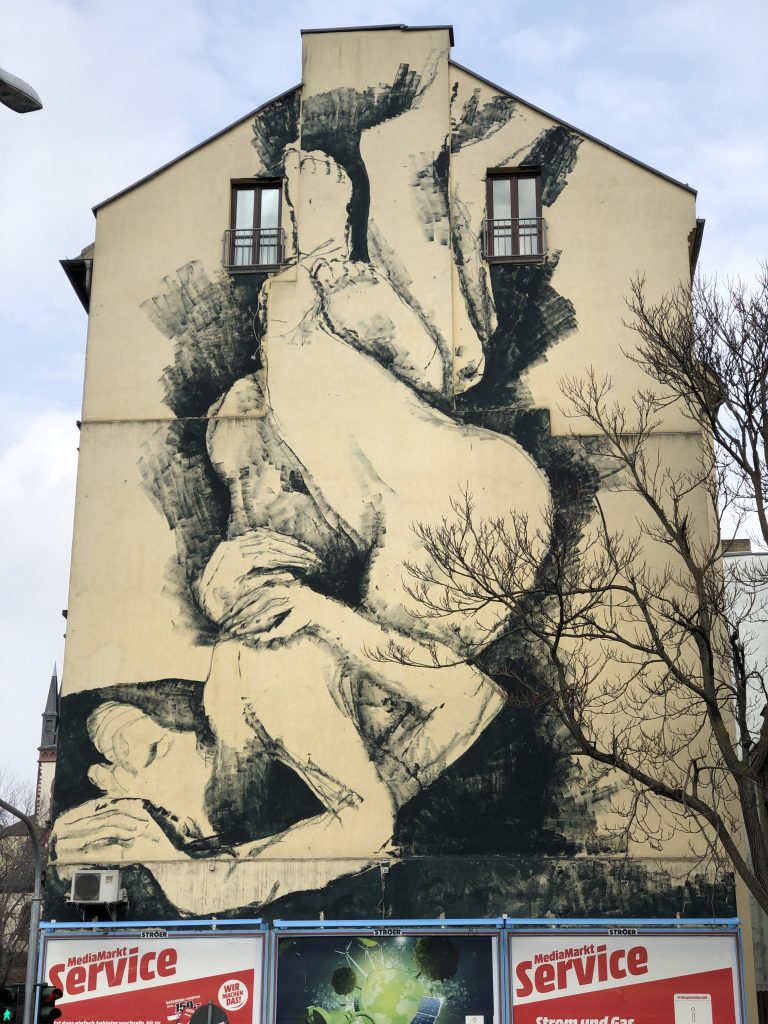
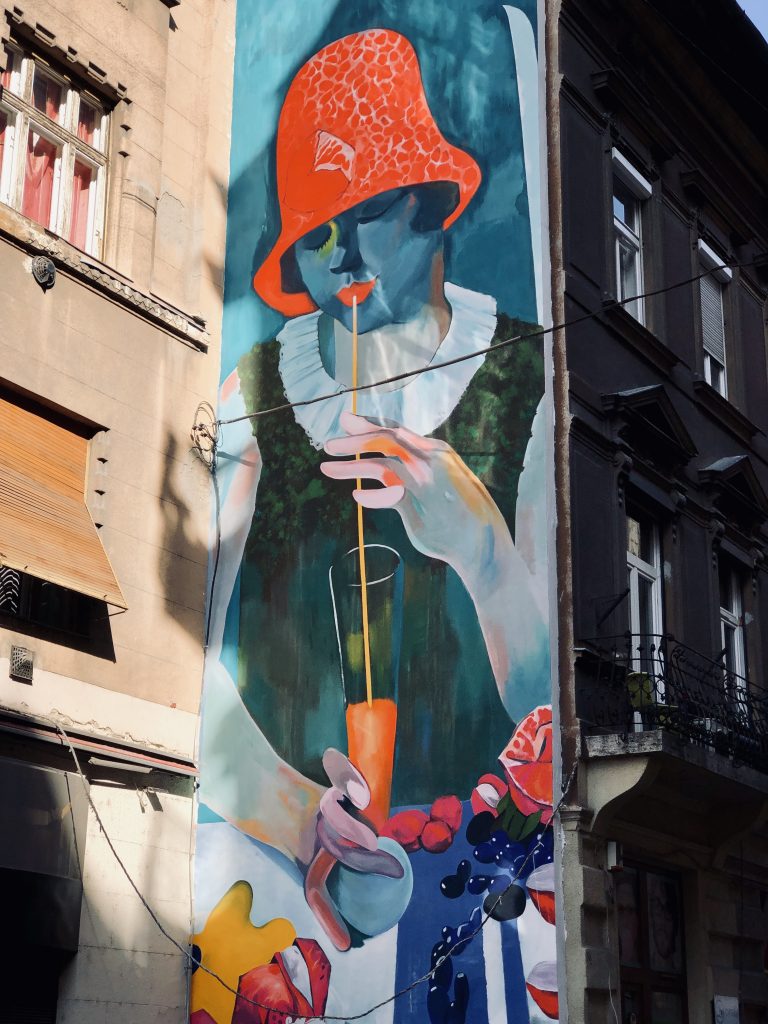
Not with the modern murals and graffiti like you see in the bigger European cities . . .

Lisbon, Portugal (2018)
Wiesbaden, Germany (2018)
Budapest, Hungary (2019)

. . . No.

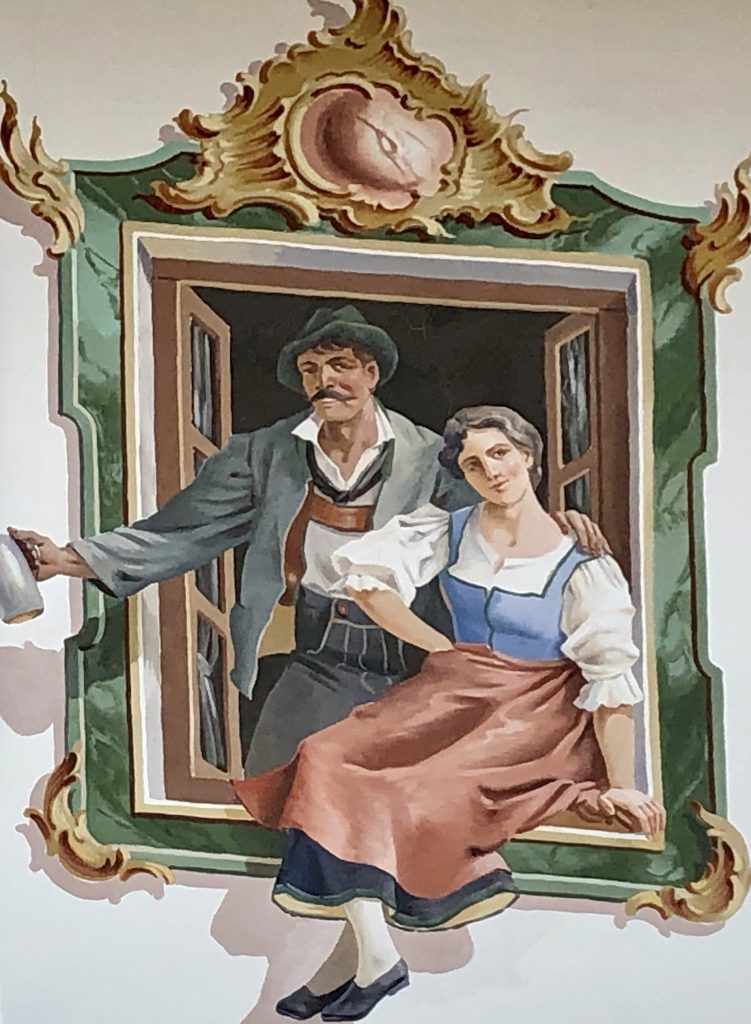
The houses here are adorned like the ceiling of the Sistine Chapel — like Renaissance artists moonlighted as housepainters, filling bland plaster on the sides of everything from church steeples to government buildings to barns with art!

On a guided tour of Ludwigstraße, I learned that many of the murals weren’t simply beautiful, but that they meant something — they told a story — either scenes from the Bible, or the lives of Saints, or just the history and the folklore of the people who lived here. All things I wasn’t immediately familiar with as a secular American. 

But when I looked for more information about the artists and the meaning of all the art scattered around the town, I learned that there is no record specifically for these paintings the locals call “Lüftlmalerei”.

(There I am, standing in front of Gasthof Fraundorfer on Ludwigstraße in Partenkirchen!)

What few books I could find on the subject only mentioned a few artists, only listed a few, select paintings, and, worst of all, were all out of date and out of print.

There is a government body dedicated to cataloguing and preserving historical artifacts in Germany, the Bayerisches Landesamt für Denkmalpflege, which works to protect historic and cultural objects — whether those are buildings, statues, or even façade paintings. They periodically publish an updated Denkmalliste, or a list of protected items, which includes certain Lüftlmalerei in the Garmisch-Partenkirchen area of Bavaria.

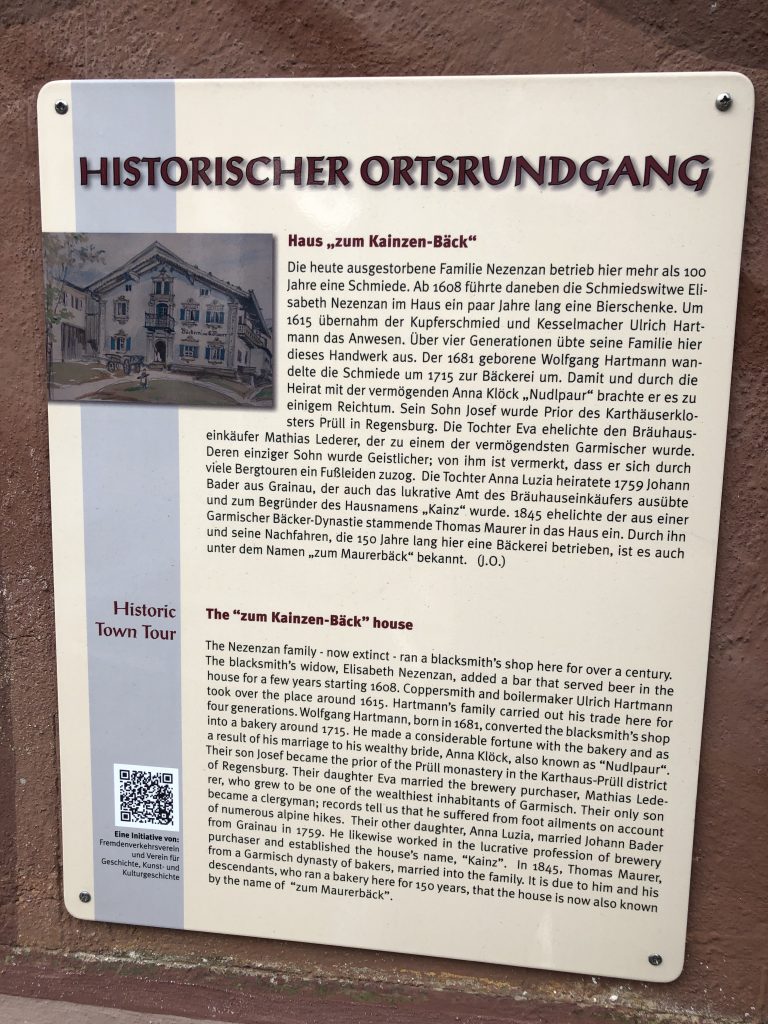
At the same time, the local tourist office had placed plaques on some of the more historic buildings in town, and even once created an interactive online audioguide explaining their place in history.

However, there simply was no map or guide, either online or in print, specifically made for the Lüftlmalerei.

So I started taking pictures of the murals that I saw on morning jogs throughout the town. Quite literally, I was jogging in the footsteps of Franz Josef Bronner, who, some 120 years before, wrote:

“On my numerous hikes through the Bavarian highlands, at the beginning, just for the sake of hobby, I took pictures of one or the other picture-decorated farmhouse that caught my eye. Later I purposefully followed the traces of old fresco paintings and did not shy away from the 4-5 hours long way to remote farms.”1

More than once, someone stopped me while I ran, made me take the earbuds out of my ears, and gesticulated, in frantic German, wanting to know just why was I taking pictures of their house?!?!

There were others, though (retirees, mostly, gardening as I stopped to stare at the murals on their house) who were more than happy to share the story behind their Lüftlmalerei — who were, in fact, quite proud to see someone take such an interest.

So often, we walk through the world without noticing the beauty of the simple things around us. So often, we take them for granted. Like asking someone about a tattoo I might have glanced, poking out from beneath a sleeve, my research was an invitation for a conversation. In the simple act of noticing something so private and personal, I allowed other people an opportunity to describe all the reasons it was beautiful and important to them.  

So when I explained to those who stopped me — angry that I might have ill intent or “long fingers,” as they say in German — they had to smile when I scrolled on my phone, and all they saw for screen after screen were pictures of Lüftlmalerei. And it occurred to them — perhaps for the very first time — that someone was curious to know what the paintings on the walls were really all about. What did they mean?

Like Franz Josef Bronner around the turn of the last century, I suddenly found myself with a collection of farmhouse photos and notebooks full of half-scribbled notes.2

After a while, I began to think very seriously about writing a book of my own — a guidebook, perhaps, or maybe a walking tour of the market town. Perhaps a coffee-table photo book, or even a work of serious academic rigor. 

But soon, the sheer volume of information and pictures I was collecting proved too big for just another long forgotten tomb of Lüftl lore. Like Scheherazade, I had collected more than a thousand and one stories — about the art, the artists, and the sheer act of researching both.

What I had, was the start of an encyclopedia.

And, given the technology we have today, there was no reason that there shouldn’t be, not just another book, but something online that anyone could access while wandering the town, curious about what they saw.

And while my goal was once to create a comprehensive codified collection of ALL the Lüftlmalerei in and around Garmisch-Partenkirchen, I have now moved away and can no longer readily research this topic that so first tickled my fancy.

This online field-notebook, then, will simply have to now remain a time capsule and an archive of my time there and the murals that I saw. 

If you happen to spot a mural I’ve missed or a new one that’s gone up, have a family legend to share, or simply want to talk all things fresco, drop me a line.

Danke fürs Vorbeischauen!

–Justin

  1. Franz Josef Bronner, Von deutscher Sitt' und Art (Munich: Max Kellerer, 1908), p. 305: "Auf meinen zahlreichen Wanderungen durch das bayerische Hochland habe ich anfänglich auch nur aus Liebhaberei das eine oder andere bildergeschmückte Bauernhaus, das mir besonders ins Auge stach, abgeknipst. Später ging ich zielbewußt den Spuren alter Freskomalerei nach und scheute oft den 4-5 Stunden weiten Weg zu abgelegenen Einödhöfen nicht."
  2. Franz Josef Bronner, Von deutscher Sitt' und Art (Munich: Verlag Max Kellerer, 1908), p. 305: "Heute liegt vor mir eine Sammlung von 120 freskengeschmückten Gebirgshäusern; zwei Notizbücher sind mit Inschriften und Sinnsprüchen von alten Bauernhäusern vollgeschrieben; die Bilder und Schriften sind verglichen und ich glaube, das Ganze überblickend, sagen zu dürfen: Was uns da vor Augen tritt, ist ein Stück deutschen Volkstums, das in seiner Eigenart und Kernhaftigkeit die Beachtung und Wertschätzung weiter Kreise verdient."